The team
Meet the team building the Large Brain Model
Neuroscientists, AI researchers, and engineers committed to building the future of non-invasive brain decoding.

Tan Le
CEO
WEF Global Future Council on Neurotechnology
20 years pioneering mobile EEG & BCI
TED Speaker
Tan Le is CEO and Founder of Emotiv and Dcode.AI. Over 15 years she has built the largest non-invasive EEG dataset in the world — 14.4 million minutes of training-grade signal across 4,000+ institutions in 140+ countries — and the only corpus on which a true Large Brain Model can be trained. She sits on the World Economic Forum's Global Future Council on Neurotechnology, has given three TED talks viewed by millions, and is the author of The NeuroGeneration. A former Young Australian of the Year and National Geographic Emerging Explorer, she is widely recognised as a leading voice on the responsible development of neurotechnology.

Dr Navid Foumani
Foundation model Architect & Lead
The architect of Emotiv's foundation model approach. Navid is lead author of EEG2Rep (KDD '24 Audience Appreciation Award), the self-supervised representation learning framework that established best-in-class performance across six EEG tasks and of EEGX (arXiv:2511.08861), Emotiv's device-agnostic, noise-robust transformer foundation model that handles varying channel configurations, recording lengths, and electrode combinations across heterogeneous hardware. As a NeurIPS reviewer in the EEG and brain foundation model track in 2026, a cohort that received over 100 submissions this cycle, Navid sits at the centre of the research community defining this category.
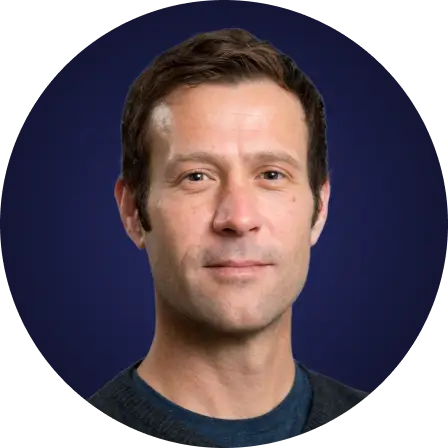
Dr Nikolas Williams
Director of neuroscience & Research
EEG neuroscience and cognitive science authority with 15 years of academic and applied research experience. With a background and peer-reviewed publications across the areas of attention and memory, neurodegenerative disease, psychiatric neuroscience, and hardware validation, he leads the corpus curation and research methodology function at Emotiv and defines the protocols that define what the LBM trains on, how sessions are structured across institutions and devices, and what scientific standards the dataset must meet. As the senior scientific voice on neuroscience methodology, he is the bridge between Emotiv’s neuroscience rigor and its model development program, complementing Dr Geoff Mackellar's signal-processing authority and Dr Navid Foumani's foundation-model architecture work.

Patrick Chu
VP of Software Engineering
With over 20 years of experience in neurotechnology, Patrick is a veteran in building and scaling complex tech solutions. As VP of Engineering, he leads the development of Dcode AI's core platform, translating groundbreaking research into a functional, reliable, and scalable product. His extensive background in the field is instrumental in ensuring Dcode AI's technology is poised to meet the demands of a rapidly evolving industry.
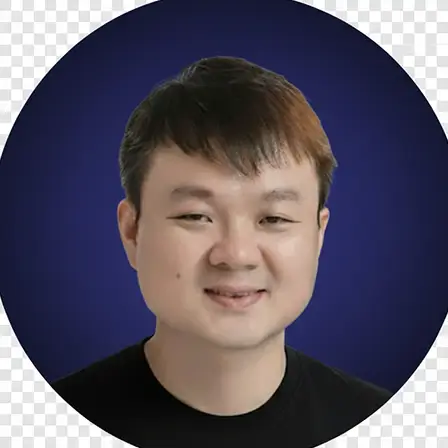
Cuong Nguyen
Senior ML Ops Engineer
Cuong ensures that Dcode AI's powerful research models are ready for the real world. As a Senior ML Ops Engineer, he is an expert in bringing machine learning models from the lab into production. His work in building scalable and reliable systems for data management, model deployment, and monitoring is fundamental to Dcode AI's product roadmap, making the universal foundation model accessible to developers and researchers globally.

Dr Geoff Mackellar
CTO
CTO & Co-Founder, Geoff is the scientific architect of the Large Brain Model — responsible for the foundation model architecture, training methodology, and the physical sensor network that made the corpus possible. A PhD physicist with 15+ patents, he designed every generation of Emotiv's sensor network, from the original EPOC to the MN8 in-ear EEG, building the signal acquisition and processing pipeline that underpins 197.5 million channel-minutes of training signal. His cross-disciplinary ownership — spanning foundation model architecture, signal processing, and applied neuroscience, the full stack from sensor to model output — is what makes the LBM's corpus properties replicable at scale.
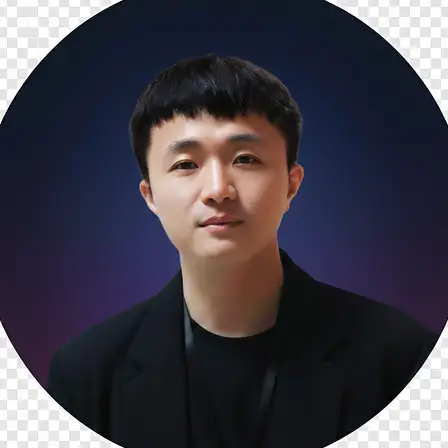
Dr Jiazhen Hong
AI Research Scientist
The architect of Emotiv's edge and long-sequence EEG modeling. Jiazhen is lead author of EEGM2 (arXiv:2502.17873), the Mamba-2 architecture that runs at 4.5M parameters with linear compute scaling, enabling brain model inference on consumer hardware. He is also lead author of SAMBA (arXiv:2511.18571), a self-supervised Mamba-based U-shaped encoder-decoder that addresses one of the hardest open problems in EEG foundation modeling: long-sequence context across heterogeneous electrode configurations. SAMBA introduces Temporal Semantic Random Masking, Multi-Head Differential Mamba for redundancy suppression, and Spatial-Adaptive Input Embedding that generalises across devices, outperforming state-of-the-art across thirteen EEG datasets. Together, EEGM2 and SAMBA define Emotiv's edge deployment and scalable architecture strategy.
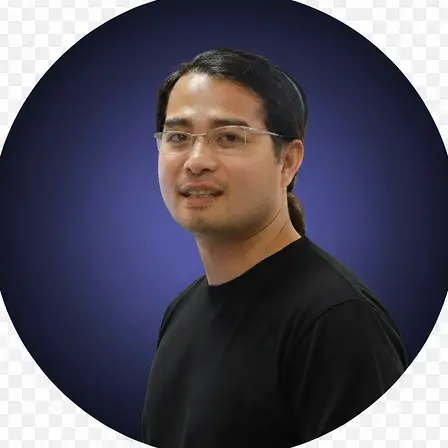
Dr Nam Nguyen
Director of Corpus Curation
The engineering authority behind the quality of the data the Large Brain Model trains on. Nam owns the curation standards that govern every step between raw EEG collection and the pre-training pipeline; artifact classification protocols, device-specific metadata schemas, and the consistency gates that determine what enters the corpus. His background is in signal processing under conditions where data quality has physical consequences. At Halliburton, he built acoustic signal processing systems for downhole leak detection in oil wells, developed ML classification pipelines for leak characterisation, and designed embedded firmware for drive-by-wire control of tractor tools operating thousands of feet underground. At BlackBerry, he developed audio localisation algorithms prototyped on DSP hardware. Earlier work spanned statistical software development for clinical research and pharmaceutical drug trials; environments where metadata integrity and pipeline consistency are non-negotiable. Twenty-one granted US patents. EEG curation at the scale of 197.5M channel-minutes across heterogeneous hardware requires exactly this discipline: systematic artifact classification, rigorous schema enforcement, and pipeline rigour built from years of signal processing where failure is not recoverable.

Quoc Nguyen
ML Ops Engineer
Quoc ensures that Dcode AI's powerful research models are ready for the real world. As an ML Ops Engineer, his expertise is in bringing machine learning models from the lab into production. He is skilled in designing and developing scalable and reliable systems for model deployment, monitoring, and performance tracking, using tools like MetaFlow, VertexAI and TensorBoard. Quoc's work is fundamental to Dcode AI's mission of building a scalable and efficient foundation model, making it accessible to developers and researchers globally.
Tan Le
CEO
WEF Global Future Council on Neurotechnology
20 years pioneering mobile EEG & BCI
TED Speaker
Tan Le is CEO and Founder of Emotiv and Dcode.AI. Over 15 years she has built the largest non-invasive EEG dataset in the world — 14.4 million minutes of training-grade signal across 4,000+ institutions in 140+ countries — and the only corpus on which a true Large Brain Model can be trained. She sits on the World Economic Forum's Global Future Council on Neurotechnology, has given three TED talks viewed by millions, and is the author of The NeuroGeneration. A former Young Australian of the Year and National Geographic Emerging Explorer, she is widely recognised as a leading voice on the responsible development of neurotechnology.
Dr Geoff Mackellar
CTO
CTO & Co-Founder, Geoff is the scientific architect of the Large Brain Model — responsible for the foundation model architecture, training methodology, and the physical sensor network that made the corpus possible. A PhD physicist with 15+ patents, he designed every generation of Emotiv's sensor network, from the original EPOC to the MN8 in-ear EEG, building the signal acquisition and processing pipeline that underpins 197.5 million channel-minutes of training signal. His cross-disciplinary ownership — spanning foundation model architecture, signal processing, and applied neuroscience, the full stack from sensor to model output — is what makes the LBM's corpus properties replicable at scale.
Dr Navid Foumani
Foundation model Architect & Lead
The architect of Emotiv's foundation model approach. Navid is lead author of EEG2Rep (KDD '24 Audience Appreciation Award), the self-supervised representation learning framework that established best-in-class performance across six EEG tasks and of EEGX (arXiv:2511.08861), Emotiv's device-agnostic, noise-robust transformer foundation model that handles varying channel configurations, recording lengths, and electrode combinations across heterogeneous hardware. As a NeurIPS reviewer in the EEG and brain foundation model track in 2026, a cohort that received over 100 submissions this cycle, Navid sits at the centre of the research community defining this category.
Dr Jiazhen Hong
AI Research Scientist
The architect of Emotiv's edge and long-sequence EEG modeling. Jiazhen is lead author of EEGM2 (arXiv:2502.17873), the Mamba-2 architecture that runs at 4.5M parameters with linear compute scaling, enabling brain model inference on consumer hardware. He is also lead author of SAMBA (arXiv:2511.18571), a self-supervised Mamba-based U-shaped encoder-decoder that addresses one of the hardest open problems in EEG foundation modeling: long-sequence context across heterogeneous electrode configurations. SAMBA introduces Temporal Semantic Random Masking, Multi-Head Differential Mamba for redundancy suppression, and Spatial-Adaptive Input Embedding that generalises across devices, outperforming state-of-the-art across thirteen EEG datasets. Together, EEGM2 and SAMBA define Emotiv's edge deployment and scalable architecture strategy.
Dr Nikolas Williams
Director of neuroscience & Research
EEG neuroscience and cognitive science authority with 15 years of academic and applied research experience. With a background and peer-reviewed publications across the areas of attention and memory, neurodegenerative disease, psychiatric neuroscience, and hardware validation, he leads the corpus curation and research methodology function at Emotiv and defines the protocols that define what the LBM trains on, how sessions are structured across institutions and devices, and what scientific standards the dataset must meet. As the senior scientific voice on neuroscience methodology, he is the bridge between Emotiv’s neuroscience rigor and its model development program, complementing Dr Geoff Mackellar's signal-processing authority and Dr Navid Foumani's foundation-model architecture work.
Dr Nam Nguyen
Director of Corpus Curation
The engineering authority behind the quality of the data the Large Brain Model trains on. Nam owns the curation standards that govern every step between raw EEG collection and the pre-training pipeline; artifact classification protocols, device-specific metadata schemas, and the consistency gates that determine what enters the corpus. His background is in signal processing under conditions where data quality has physical consequences. At Halliburton, he built acoustic signal processing systems for downhole leak detection in oil wells, developed ML classification pipelines for leak characterisation, and designed embedded firmware for drive-by-wire control of tractor tools operating thousands of feet underground. At BlackBerry, he developed audio localisation algorithms prototyped on DSP hardware. Earlier work spanned statistical software development for clinical research and pharmaceutical drug trials; environments where metadata integrity and pipeline consistency are non-negotiable. Twenty-one granted US patents. EEG curation at the scale of 197.5M channel-minutes across heterogeneous hardware requires exactly this discipline: systematic artifact classification, rigorous schema enforcement, and pipeline rigour built from years of signal processing where failure is not recoverable.
Patrick Chu
VP of Software Engineering
With over 20 years of experience in neurotechnology, Patrick is a veteran in building and scaling complex tech solutions. As VP of Engineering, he leads the development of Dcode AI's core platform, translating groundbreaking research into a functional, reliable, and scalable product. His extensive background in the field is instrumental in ensuring Dcode AI's technology is poised to meet the demands of a rapidly evolving industry.
Quoc Nguyen
ML Ops Engineer
Quoc ensures that Dcode AI's powerful research models are ready for the real world. As an ML Ops Engineer, his expertise is in bringing machine learning models from the lab into production. He is skilled in designing and developing scalable and reliable systems for model deployment, monitoring, and performance tracking, using tools like MetaFlow, VertexAI and TensorBoard. Quoc's work is fundamental to Dcode AI's mission of building a scalable and efficient foundation model, making it accessible to developers and researchers globally.
Cuong Nguyen
Senior ML Ops Engineer
Cuong ensures that Dcode AI's powerful research models are ready for the real world. As a Senior ML Ops Engineer, he is an expert in bringing machine learning models from the lab into production. His work in building scalable and reliable systems for data management, model deployment, and monitoring is fundamental to Dcode AI's product roadmap, making the universal foundation model accessible to developers and researchers globally.
Tan Le
CEO
WEF Global Future Council on Neurotechnology
20 years pioneering mobile EEG & BCI
TED Speaker
Tan Le is CEO and Founder of Emotiv and Dcode.AI. Over 15 years she has built the largest non-invasive EEG dataset in the world — 14.4 million minutes of training-grade signal across 4,000+ institutions in 140+ countries — and the only corpus on which a true Large Brain Model can be trained. She sits on the World Economic Forum's Global Future Council on Neurotechnology, has given three TED talks viewed by millions, and is the author of The NeuroGeneration. A former Young Australian of the Year and National Geographic Emerging Explorer, she is widely recognised as a leading voice on the responsible development of neurotechnology.
Dr Geoff Mackellar
CTO
CTO & Co-Founder, Geoff is the scientific architect of the Large Brain Model — responsible for the foundation model architecture, training methodology, and the physical sensor network that made the corpus possible. A PhD physicist with 15+ patents, he designed every generation of Emotiv's sensor network, from the original EPOC to the MN8 in-ear EEG, building the signal acquisition and processing pipeline that underpins 197.5 million channel-minutes of training signal. His cross-disciplinary ownership — spanning foundation model architecture, signal processing, and applied neuroscience, the full stack from sensor to model output — is what makes the LBM's corpus properties replicable at scale.
Dr Navid Foumani
Foundation model Architect & Lead
The architect of Emotiv's foundation model approach. Navid is lead author of EEG2Rep (KDD '24 Audience Appreciation Award), the self-supervised representation learning framework that established best-in-class performance across six EEG tasks and of EEGX (arXiv:2511.08861), Emotiv's device-agnostic, noise-robust transformer foundation model that handles varying channel configurations, recording lengths, and electrode combinations across heterogeneous hardware. As a NeurIPS reviewer in the EEG and brain foundation model track in 2026, a cohort that received over 100 submissions this cycle, Navid sits at the centre of the research community defining this category.
Dr Jiazhen Hong
AI Research Scientist
The architect of Emotiv's edge and long-sequence EEG modeling. Jiazhen is lead author of EEGM2 (arXiv:2502.17873), the Mamba-2 architecture that runs at 4.5M parameters with linear compute scaling, enabling brain model inference on consumer hardware. He is also lead author of SAMBA (arXiv:2511.18571), a self-supervised Mamba-based U-shaped encoder-decoder that addresses one of the hardest open problems in EEG foundation modeling: long-sequence context across heterogeneous electrode configurations. SAMBA introduces Temporal Semantic Random Masking, Multi-Head Differential Mamba for redundancy suppression, and Spatial-Adaptive Input Embedding that generalises across devices, outperforming state-of-the-art across thirteen EEG datasets. Together, EEGM2 and SAMBA define Emotiv's edge deployment and scalable architecture strategy.
Dr Nikolas Williams
Director of neuroscience & Research
EEG neuroscience and cognitive science authority with 15 years of academic and applied research experience. With a background and peer-reviewed publications across the areas of attention and memory, neurodegenerative disease, psychiatric neuroscience, and hardware validation, he leads the corpus curation and research methodology function at Emotiv and defines the protocols that define what the LBM trains on, how sessions are structured across institutions and devices, and what scientific standards the dataset must meet. As the senior scientific voice on neuroscience methodology, he is the bridge between Emotiv’s neuroscience rigor and its model development program, complementing Dr Geoff Mackellar's signal-processing authority and Dr Navid Foumani's foundation-model architecture work.
Dr Nam Nguyen
Director of Corpus Curation
The engineering authority behind the quality of the data the Large Brain Model trains on. Nam owns the curation standards that govern every step between raw EEG collection and the pre-training pipeline; artifact classification protocols, device-specific metadata schemas, and the consistency gates that determine what enters the corpus. His background is in signal processing under conditions where data quality has physical consequences. At Halliburton, he built acoustic signal processing systems for downhole leak detection in oil wells, developed ML classification pipelines for leak characterisation, and designed embedded firmware for drive-by-wire control of tractor tools operating thousands of feet underground. At BlackBerry, he developed audio localisation algorithms prototyped on DSP hardware. Earlier work spanned statistical software development for clinical research and pharmaceutical drug trials; environments where metadata integrity and pipeline consistency are non-negotiable. Twenty-one granted US patents. EEG curation at the scale of 197.5M channel-minutes across heterogeneous hardware requires exactly this discipline: systematic artifact classification, rigorous schema enforcement, and pipeline rigour built from years of signal processing where failure is not recoverable.
Patrick Chu
VP of Software Engineering
With over 20 years of experience in neurotechnology, Patrick is a veteran in building and scaling complex tech solutions. As VP of Engineering, he leads the development of Dcode AI's core platform, translating groundbreaking research into a functional, reliable, and scalable product. His extensive background in the field is instrumental in ensuring Dcode AI's technology is poised to meet the demands of a rapidly evolving industry.
Quoc Nguyen
ML Ops Engineer
Quoc ensures that Dcode AI's powerful research models are ready for the real world. As an ML Ops Engineer, his expertise is in bringing machine learning models from the lab into production. He is skilled in designing and developing scalable and reliable systems for model deployment, monitoring, and performance tracking, using tools like MetaFlow, VertexAI and TensorBoard. Quoc's work is fundamental to Dcode AI's mission of building a scalable and efficient foundation model, making it accessible to developers and researchers globally.
Cuong Nguyen
Senior ML Ops Engineer
Cuong ensures that Dcode AI's powerful research models are ready for the real world. As a Senior ML Ops Engineer, he is an expert in bringing machine learning models from the lab into production. His work in building scalable and reliable systems for data management, model deployment, and monitoring is fundamental to Dcode AI's product roadmap, making the universal foundation model accessible to developers and researchers globally.
Market opportunity
The global neurotechnology market is projected to reach over $50 billion by 2034, driven by the increasing demand for solutions to neurological disorders. Despite this growth, the market remains highly fragmented by device type and
data protocol, creating a significant barrier to innovation. Dcode AI's universal foundation model is poised to solve this problem by creating a standardized language for the brain, unlocking new applications and accelerating breakthroughs in research, health, and consumer neurotech.
Join our journey
Interested in learning more about Dcode AI and our mission to build a universal language for the brain? We are actively engaged in discussions with strategic partners and investors.
dcode.ai · built on the Emotiv corpus · emotiv.com
© 2026 Dcode AI. All rights reserved.