Live readingSimulated
Reads the mind's state, live
Attention, load, fatigue, emotion and intent, second by second.
The leading AI model built on brain activity. It reads what we don’t say, from the wearables we already wear.
Simulated signal, running live.
AI learned to talk by reading what we write. This model learns from what we experience: over 505,000 hours of brain activity.
15 years, 4,000+ institutions. It can't be bought or copied.
Training hours per model. The LBM's include 314,000+ hours of Emotiv's own recordings.
The hardware is ready. The data isn't.
2 to 256 sensors, no common standard.
Sleep, emotion, movement: each built from zero.
Mood, sleep and age all shift the signal.
60–80% of research time goes on cleaning data.
The LBM learns from all of it at once. GPT, for brain signals.
Attention, load, fatigue, emotion and intent, second by second.
From 2 to 32 sensors, without retraining for each device.
Learned from 150,000+ people. Works on day one.
Beats models 8× its size. Can run on the device, so brain data never has to leave it.
A sensor slips? It fills the gap.
Tracks how a person's baseline shifts over months.
Illustrations, from simulated signal.
AI has read the internet. The next data comes from sensors.
Record investment in brain wearables. Each needs a brain model.
Meta's NeuralBench (2026): big models already win most tasks. The LBM enters after full training.
Body data already feeds AI health apps. The brain is the missing layer.
Illustrations: the bars show the trend, not amounts, and the lit tasks are not exact results.
Five peer-reviewed papers.
Hides parts of the signal and learns to predict them, without labels and despite noise.
Reads long stretches of signal at once. Best across 13 datasets.
Long recordings, on a model small enough for wearables.
Works on headsets it has never seen, whatever the sensor layout.
Typing with brain signal, with little setup. 94% of letters read right.
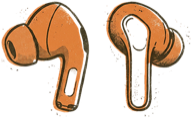
Runs on the device itself, even offline.
For pharma, research and enterprise. On-site option.
POST /v1/decode
{ "device": "earbud" }

→ response
{ "state": "attention",
  "score": 0.92 }
Signal in, brain states out.
Your readings, your apps, your call.
“No general brain model exists because the data to train one has never existed. Until now.”
Want the full technical detail? Read the docs or email api@dcode.ai.
Like the models behind ChatGPT, but trained on brain signal (EEG) instead of text. It turns wearable signal into readings apps can use.
Any compatible EEG device, from 2-sensor earbuds to 32-sensor caps.
No. It learned from 150,000+ people, so it works straight away.
It can run on the device, so raw signal never has to leave it. The data belongs to the user.
The data took 15 years to gather, from healthy people in 156 countries. Most datasets are hospital patients in a few Western countries.
Scope call, a test on your hardware, integration, then a licence.
Get early access to the API.